B

Home Politics Entertenment Lifestyle Sports Business Health Local World Tech

G


Wednesday, 22 June 2016

Viral meningitis

Viral meningitis is an infection of the brain that is caused by a virus. It is usually caused by enteroviruses. Viral meningitis is not so dangerous as meningitis that is caused by bacteria and the symptoms are often mild or similar to flu. This disease occurs mainly in the summer. Children get this infection more than adults. Children usually recover completely after a two weeks. Strong medicines are often not needed.


Treatment for Viral meningitis

Treatment for viral meningitis is common supportive. Rest, hydration, antipyretics, and pain or anti-inflammatory medications may be given as needed. The most important decision is whether to initiate antimicrobial therapy empirically for bacterial meningitis while waiting for the cause to be identified. Intravenous (IV) antibiotics should be administered promptly if bacterial meningitis is suspected.

No surgical therapy is usually indicated in patients with viral meningitis. In rare patients in whom viral meningitis is complicated by hydrocephalus, a CSF diversion procedure, such as ventriculoperitoneal (VP) or LP shunting, may be required. Ventriculostomy with an external collection system is indicated in the rare cases of acute hydrocephalus.

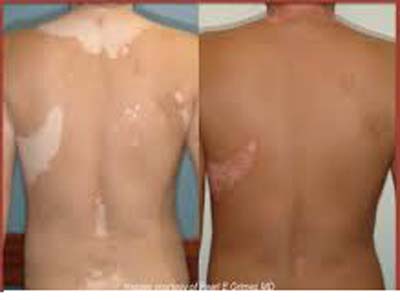
Vitiligo

Vitiligo is a long lasting skin disease that causes the losing of color from the skin. It occurs when the melanocytes, cells that give skin their color, die or do not work.


Treatment for Vitiligo


Today, doctors do not understand what causes the disease, so right now, it can not be cured. Some things can be done to fight its effects, though. Makeup or cosmetics can cover up the parts of the skin with vitiligo. Also, staying out of the sun to prevent tanning is good. But the treatment given by most skin doctors is cortico steroid cream. Breakthrough discovery in 2004 allowed for the transplant of melanocytes to vitiligo affected areas, repigmenting the region.

Varicose veins

Varicose veins are a condition in which the veins in the leg area have become enlarged. If veins have become varicose, the leaflets of the valves do not work properly, and in turn, the vein valves themselves won't work. The blood then flows backwards, at which point the veins then start to increase. This condition is most common in superficial veins which involve the legs. The condition not only causes cosmetic troubles, it also creates itching and painful problems.

Treatment for Varicose veins

Maidesen procedures are done either to remove varicose veins or to close them. Removing or closing varicose veins usually doesn't cause problems with blood flow because the blood starts moving through other veins.

You may be treated with one or more of the procedures described below. Common side effects right after most of these procedures include bruising, swelling, skin discoloration, and slight pain.

The side effects are most severe with vein stripping and ligation (li-GA-shun). Rarely, this procedure can cause severe pain, infections, blood clots, and scarring.

Wart

Warts are growths on the skin. Very often they resemble solid blisters. Usually,

applying pressure a wart causes pain. Warts are caused by viruses in the HPV family. As there are many types of viruses in the HPV family, there are also many types of wart. In most cases, warts are not dangerous, but may cause a lot of pain.

The virus infects skin cells; if these skin cells move to other areas, new warts can grow there. Warts contain tissue that bleeds easily. A bleeding of this tissue allows the wart to spread to other places. In general, coming in contact with infected tissue spreads the infection.

There are different ways of getting rid of a wart:

There are some over the counter drugs, that usually contain an acid, very often salicylic acid. Getting rid of a wart that way involves cleaning the area around the wart, and treating it with the acid. This will slowly kill wart tissue. Dead tissue can then be removed. Getting rid of a wart that way usually takes several weeks. There are different drugs, with different acids. Some prescription drugs may contain stronger acids, such as chloroacetic acid or silver nitrate. All acids are caustic. This means, healthy tissue around the wart needs to be protected, before the substance is applied.
It is possible to kill off the wart using extreme cold (called cryotherapy). A physician or a specialist doctor for skin diseases usially does this. Before the cold is applied, a local anestetic is used to reduce the pain. Using this method will cause scars.